

When Speed Starts Killing Performance
Speed earns trust too quickly, especially in environments where movement is constantly rewarded and stillness is treated as a weakness.
The moment things start moving fast, it creates the impression that progress is happening. Work gets done, decisions are made quickly, and the system feels alive. That sense of activity gives people confidence because movement looks like improvement and pace feels like control.
That confidence can be misleading.
Speed does not create progress by itself. It amplifies whatever already exists underneath. When the foundation is clear, speed sharpens execution and accelerates results. When the foundation is weak, speed accelerates confusion without making it obvious.
That is how performance starts declining while everything still looks productive.

Speed Without Direction Creates Invisible Damage
Speed begins to damage performance when direction is not fully clear, even if the system continues to deliver visible output.
At the beginning, nothing appears wrong. Tasks keep moving, deadlines are met, and work continues to flow. From the outside, the system looks efficient and reliable. Inside, something more subtle starts to shift.
Decisions happen faster, yet they carry less depth. People rely more on assumptions because there is no space to fully understand what is happening. Conversations become shorter while losing precision, and alignment across the team starts weakening without being acknowledged.
The system keeps moving, which makes the shift difficult to notice.
This is where the real damage begins, not through visible failure but through a gradual decline in the quality of thinking behind every action.
That decline compounds.
At some point, the system is no longer moving with clarity.
It is moving out of habit.
Why Reactive Execution Feels Productive
As speed increases, execution becomes reactive, and that reactivity creates a convincing illusion of performance.
Work starts being driven by what appears next instead of what actually matters. People respond quickly, close tasks, move forward, and repeat the cycle. That rhythm creates constant activity, and constant activity is easily mistaken for progress.
The system remains busy, and that busyness becomes the signal people rely on.
This is where confusion hides most effectively.
Reactive execution keeps people engaged while quietly removing the space required for clear thinking. Decisions are made faster than they are understood, and work continues before alignment is properly established.
That is an uncomfortable reality.
Some teams are not moving fast because they are effective.
They are moving fast because they no longer know where to slow down.
This is also where typical hustle culture gets it wrong.
Working faster does not make you more productive when you are unclear.
It makes you more committed to the wrong thing.
How Fast Movement Deepens Misalignment
When speed continues without clarity, alignment begins to weaken across the system in a way that is easy to miss.
Each person starts operating based on their own interpretation of what needs to be done. Those interpretations remain close enough to avoid immediate conflict, yet different enough to create small gaps. Over time, those gaps expand into visible misalignment between people, teams, and decisions.
This is where the system drifts.
That drift becomes more damaging at high speed because the system moves faster than those gaps can be corrected. Work progresses, yet not in the same direction. Effort increases, yet results become less precise.
This is when small mistakes stop staying contained.
A misunderstanding leads to rework. A rushed decision introduces delays later. A missed detail forces the team to revisit what should have been clear from the beginning. At high speed, these issues spread quickly, creating repeated adjustments and unnecessary effort.

Nothing looks completely broken from the outside.
Inside, everything becomes harder than it should be.
That is the signal most teams ignore.
When speed increases and work feels heavier instead of clearer, performance is already declining.
The Signal That Speed Is Now a Problem
Speed becomes a problem when movement starts replacing clarity as the main driver of execution.
The system feels active, yet progress becomes harder to define. More time is spent correcting previous work than advancing new work. Decisions feel quicker, yet less reliable. Conversations happen more frequently, yet they fail to resolve what actually matters.
This is where speed begins to hide its own cost.
From the outside, everything still looks productive because effort remains visible. Teams stay engaged, tasks move forward, and output continues to exist. That appearance makes it difficult to challenge what is happening.
Inside the system, the experience is different.
People feel the friction. Work requires more adjustment. Clarity takes longer to reach. The same tasks demand more energy than before.
Speed does not remove confusion.
It spreads faster than people can contain it.
What Slowing Down to Realign Actually Looks Like
Slowing down at the right moment is not a loss of momentum, it is a correction that protects performance.
Realignment means creating space to restore clarity before continuing execution. It involves confirming direction, aligning understanding across the team, and reviewing whether the current approach still makes sense.
These actions may feel uncomfortable in fast environments because they interrupt movement, yet they are exactly what prevents larger problems from forming.
When direction becomes clear again, decisions improve. When alignment is restored, execution becomes cleaner. When thinking becomes structured, speed becomes useful again instead of destructive.
This is where real performance returns.
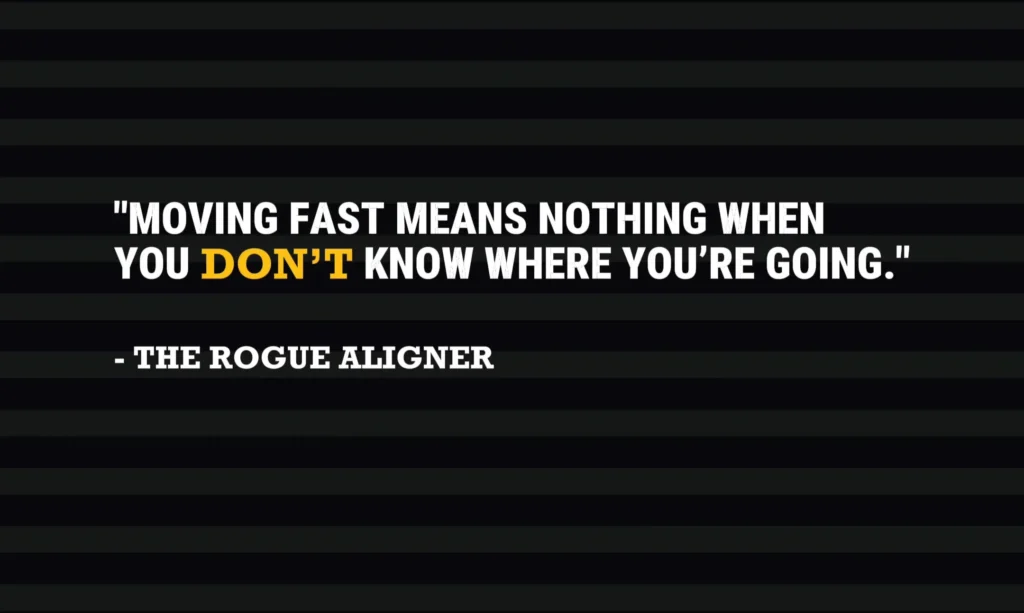
Because speed only works when it is built on clarity.
FAQs
Why can speed hurt performance at work?
Speed can hurt performance when teams move faster than their clarity. Decisions become rushed, assumptions replace understanding, and small mistakes spread before they are corrected. In that situation, speed increases activity while reducing the quality of execution.
How can teams move fast without losing performance?
Teams can move fast without losing performance by clarifying direction before execution, aligning expectations early, and checking whether work is still moving toward the right outcome. Speed works best when it is built on clear priorities, shared understanding, and clean decision-making.
That is where the real lesson sits. Speed becomes powerful only after clarity is restored. Before that, it only makes the mess travel faster. Once you see that, movement stops being impressive on its own. The real question becomes simple: is this pace creating progress, or just making confusion harder to catch? If you are ready to stop running faster inside the wrong pattern, start with The BreakAlign Method.