

Why Risk Grows When Things Are Going Well
Risk rarely begins in moments of failure, it begins in moments of comfort when everything seems to be working and no one feels the need to look any deeper.
When results are strong, the system appears stable and reliable, which creates a sense of control that feels justified. Work continues, targets are met, and the environment gives no obvious signal that something needs attention. That surface stability is exactly what allows risk to grow unnoticed, because nothing is forcing people to question what is happening underneath.
This is where most systems start drifting without realizing it, not because something broke, but because nothing pushed them to stay sharp.

When Strong Results Build False Certainty
When something works consistently, the way people interact with it changes.
At the beginning, attention is high because nothing is certain yet. People observe closely, they question decisions, and they stay sensitive to small signals that indicate whether they are moving in the right direction. That level of awareness is what allows strong results to form.
As those results become consistent, the need to observe begins to fade. The system starts to feel proven, and that feeling replaces the habit of checking it. What used to be examined closely starts getting accepted automatically, not because it has been fully understood, but because it has been validated by outcomes.
Over time, trust builds, but without continuous awareness, that trust becomes passive. People stop reading the system carefully and begin relying on what they believe it will continue to deliver. That shift is subtle, yet it changes everything, because awareness is no longer driving the system forward.
When Confidence Starts Replacing Awareness
As attention decreases, the system does not immediately fail, which makes the shift difficult to detect.
Everything still functions, results still come in, and performance looks stable from the outside. Underneath that surface, small changes begin to appear. These changes are not dramatic enough to force a reaction, yet they carry important information about what is evolving.
A slight delay in execution, a minor shift in behavior, a small drop in performance, or a change in external conditions all begin to appear in small ways. At the start, these signals would have been noticed immediately because attention was still high.
Once attention drops, those same signals lose their weight. They are explained away, postponed, or absorbed into the routine. Each one feels too small to matter, yet together they start reshaping how the system actually operates.

This is how risk builds without creating urgency, because the system continues to function while gradually disconnecting from what is really happening.
The Quiet Shift That Nobody Announces
A strong system is built on patterns that once worked well, and that strength can create a blind spot when those patterns are no longer updated.
As long as awareness remains active, the system continues to adapt. People notice what is changing and adjust accordingly, which keeps the system aligned with reality. That ongoing adjustment is what allows strong performance to continue.
When awareness fades, the system keeps running based on what used to work, even when the environment has already shifted. The structure remains in place, the processes continue, and activity stays high, which makes everything look intact from the outside.
Underneath, the connection between the system and reality starts weakening. That gap does not create immediate failure, which is why it is often ignored, but it continues to grow quietly until it becomes too large to sustain.
What feels like a sudden problem is usually the result of a gradual disconnection that went unnoticed for a long time.
Why Misalignment Grows in the Good Phases
Success creates a sense of certainty that feels deserved, yet that same certainty can limit the need to question what is happening.
When results are strong, there is no pressure forcing people to re-evaluate their assumptions. The system feels validated, which reduces curiosity and makes continuous observation feel unnecessary. People begin to rely on past outcomes instead of staying connected to present conditions.
This is where risk becomes harder to see, because there is no visible signal that something is wrong. Everything appears stable, yet the conditions that created that stability may already be shifting.
The uncomfortable part is that success can reduce accuracy without anyone noticing. People continue making decisions with confidence, even as the environment around them evolves. That confidence feels like strength, yet it can quietly weaken the system when it is no longer supported by awareness.
By the time the impact becomes visible, the change has already been present for a while, and the system has already adapted to a version of reality that no longer exists.
FAQs
Why does risk increase when things are going well?
Risk increases when things are going well because strong results reduce the urgency to question the system. People trust the pattern that created success, attention drops, and small changes become easier to miss. Over time, the system can keep performing while slowly disconnecting from what is actually happening.
How can a business prevent hidden risk during success?
A business prevents hidden risk during success by keeping awareness active even when results are strong. This means reviewing assumptions, tracking small changes, questioning what still works, and adjusting before problems become visible. Strong systems stay aligned by observing reality continuously, not only when something breaks.
WHAT IT TAKES TO STAY ALIGNED WHEN PERFORMANCE IS HIGH
The strength of a system does not come from confidence alone, it comes from sustained awareness.
A system stays aligned when people continue observing it even when it is working, when they keep questioning it even when results are positive, and when they remain sensitive to small changes instead of waiting for something obvious to break.
That level of attention keeps the connection between the system and reality intact. It allows small adjustments to happen early, which prevents larger problems from forming later.
This requires discipline, but not the kind that focuses only on execution. It requires the discipline to observe, to question, and to stay present even when there is no immediate reason to worry.
That is what most systems lose when they become successful.
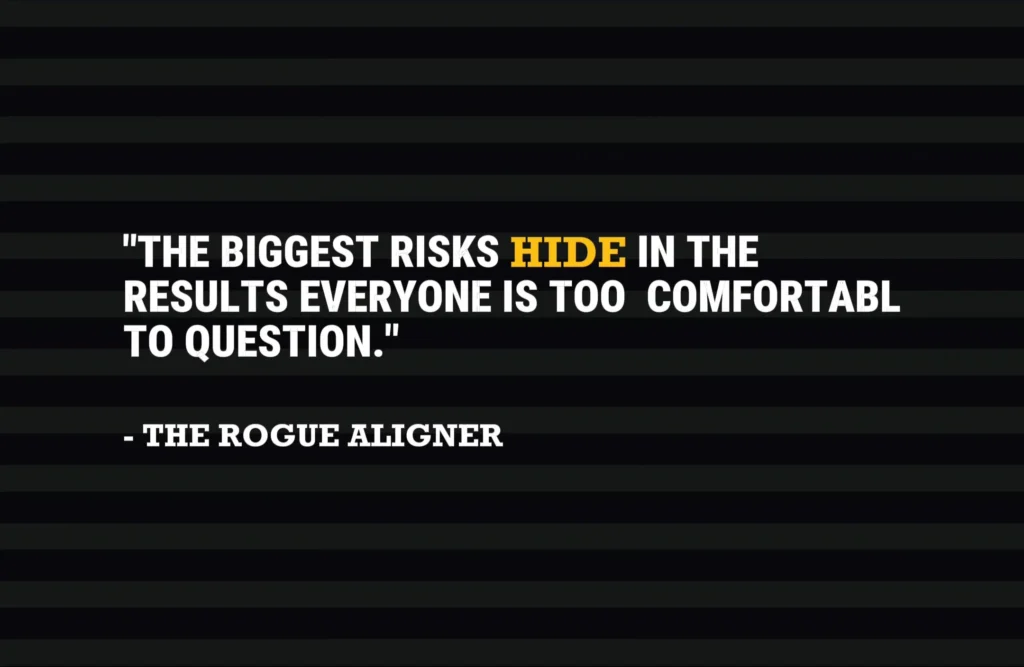
Once you see this, good results stop feeling like a green light. They become something you inspect closer, because comfort has a way of making small warnings look harmless. The next risk rarely announces itself. It usually sits quietly inside the result everyone keeps celebrating. If you are ready to notice what success may be hiding from you, start with The BreakAlign Method.