
Why Rest Doesn’t Solve Burnout
Rest is the answer people give when they don’t want to question anything else.
Take a break, slow down, step away, recharge. It sounds responsible, it feels safe, and it gives the impression that something is being handled. You follow it, you step out for a few days, your body loosens, your mind slows down, and for a moment you feel like you fixed something.
Then you go back.
And the same weight is already waiting for you. It shows up before the first real task, before the day has even built momentum, before anything meaningful has happened. The tension reconnects that fast because it was never removed, it was only paused.
That moment is uncomfortable because it exposes something people try to avoid.
The break was real. The recovery was not.
Rest helped your system calm down, but it did nothing to what keeps draining you.
This is where most people get it wrong. They assume the problem is how tired they feel, so they keep trying to fix it with more rest, longer breaks, cleaner routines, better recovery habits. They improve everything around the problem while leaving the problem exactly where it is.
That works for fatigue.
It does not work for burnout.
Why Rest Only Works for Fatigue — Not Burnout
Fatigue comes from effort. You push, you use energy, your system gets depleted, and rest brings it back. The equation is simple because the source is simple. You remove the effort, the system recovers, and when you return, you feel stronger because nothing is waiting to hit you the same way again.
Burnout does not follow that logic.
Burnout Is Built on Repetition
Burnout forms when the same pressure repeats without resolution. It is the same expectations waiting for you every morning, the same environment, the same conversations that never fully close, the same friction slowing everything down, the same decisions that take more from you than they give back.
Your system starts recognising the pattern. It stops reacting to moments and starts reacting to what it already knows is coming. Your patience shortens, your reactions speed up, your energy stops recovering fully even when you step away.
At that point, you are not dealing with effort.
You are stuck inside a loop.
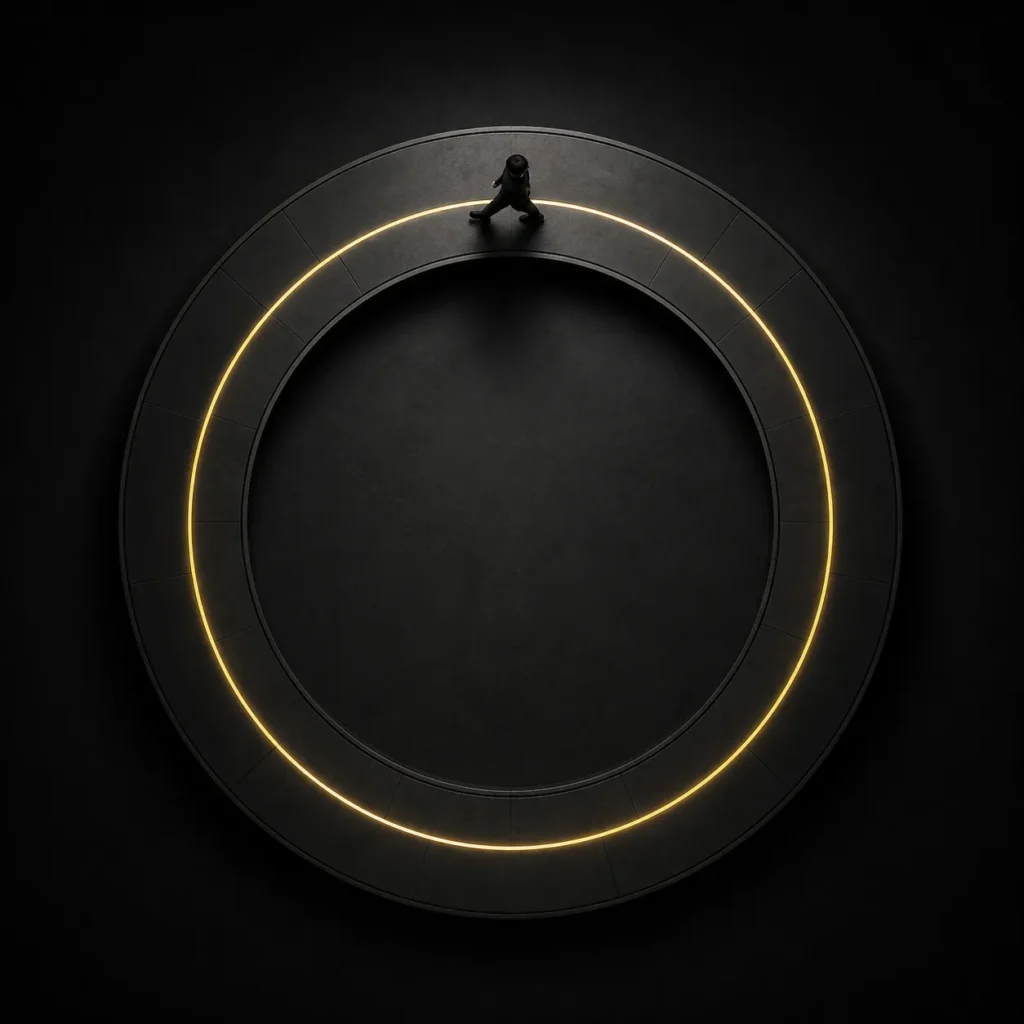
And loops do not disappear because you stepped out for a few days.
They continue the second you step back in.
The Return of the Same Tension
This is exactly why time off feels good, then fades so quickly.
When you leave, the triggers disappear, so your system finally relaxes. Your breathing settles, your mind clears, and your energy comes back just enough to convince you that the problem is being handled.
Nothing actually changed.
The structure is still there. The expectations are still there. The pressure points are still active. The system you return to is identical to the one you left.
So your system does what it is built to do.
It reconnects.
The tension does not need time to build because it already knows the pattern. It resumes from where it stopped.
That is the part people do not want to admit.
You are not exhausted because you work too much.
You are exhausted because you keep returning to something that does not resolve.
And that is a much harder problem to face.
Because it cannot be solved by taking a day off.
Burnout is not your system asking for rest.
It is your system rejecting what it keeps being placed inside.
That rejection shows up as tension, irritation, low patience, heavy thinking, and a constant sense that something is off even when everything looks fine on paper.
You can improve your sleep, clean your diet, organise your calendar, and still feel drained if the structure you return to keeps running the same pattern.
A role that forces constant reaction keeps your system in alert mode even when nothing urgent is happening. A team that runs without clear priorities turns everything into pressure because nothing ever feels complete. A process filled with friction forces you to spend energy just to move basic things forward. A routine that no longer fits creates resistance before your day even starts.
None of that gets solved by stepping away for a weekend.
And this is where burnout keeps repeating itself.
The conditions stay the same, so your system stays partially on alert. Even during rest, there is a layer that does not fully switch off because it is already anticipating what is waiting for you. That is why recovery feels incomplete. You are resting your body while your system is still preparing for impact.
At this point, most people turn inward and start blaming themselves. They assume they are not strong enough, not disciplined enough, not organised enough to handle what is in front of them. So they push harder, tighten control, manage their time more aggressively, and try to become better at surviving the same pattern.
That only deepens the loop.
Because the problem was never your capacity.
The problem is what your capacity is being used on.
Burnout is not a failure of discipline.
It is a failure of alignment.
That is what burnout is actually signalling.
It is pointing at a mismatch between what is required from you and how things are structured around you. It shows where your effort is not creating movement, where your energy is being drained without progress, where your system is forced to stay active without a clear direction.
Burnout does not ask you to handle more.
It forces you to see what no longer works.
And this is where something shifts, because once you understand that burnout is built on repetition, you stop trying to escape the pattern and start questioning it.
Burnout does not change when you leave it.
It changes when you interrupt it.
What Interrupts Burnout Where Rest Cannot
Interrupting burnout means looking directly at what you keep returning to and changing how it operates. It means addressing the environment instead of escaping it, clarifying expectations instead of carrying them blindly, removing friction instead of adapting to it, and challenging routines that no longer support how you function.
This is not about adding more.
It is about removing what keeps draining you.
When the structure changes, your response changes with it. The tension stops because the source of it is no longer active in the same way. Your energy starts recovering naturally because it is no longer being pulled into the same loop.
That is something rest will never create on its own.
Rest can pause the symptoms. It can give you temporary relief. It can create distance from the pressure for a short period of time.
It cannot remove what keeps generating that pressure every single day.
That is why it works at first, then stops working.
If rest alone could solve burnout, it would not return the moment you go back to your life. The fact that it does is not something to ignore.
It is the clearest signal you are getting.
FAQs
Why doesn’t rest solve burnout?
Rest helps when your body is tired. Burnout runs deeper. It happens when you keep giving energy to a pattern that no longer makes sense for you. A break can recharge you for a moment, but it will not change the setup you keep returning to.
That is why the tension comes back so fast.
What actually resolves burnout?
Burnout starts to resolve when you identify the pattern that keeps draining you and interrupt it. That pattern can be a role, routine, expectation, environment, relationship, or way of operating that keeps pulling energy without creating movement.

Burnout is not solved by more recovery.
It is solved by changing what keeps making recovery necessary.
Once you see the pattern, you cannot unsee it. Burnout stops looking like tiredness and starts looking like evidence. Evidence that something you keep returning to is taking more from you than it gives back. Rest can give you air, but it cannot tell you why you keep drowning in the same place. If you are ready to stop recovering from the loop and start breaking what keeps feeding it, start with The BreakAlign Method.